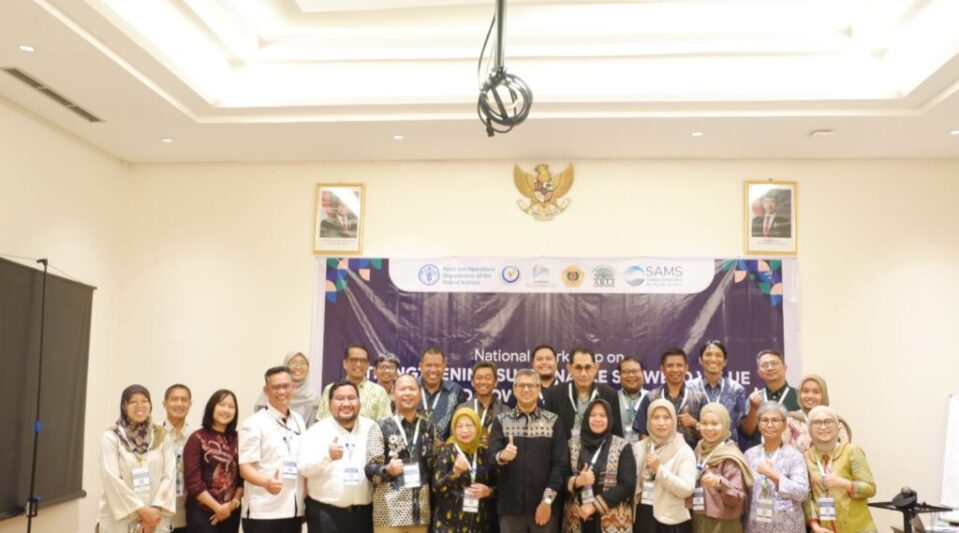
FAO and the University of Mataram Facilitate a National Workshop on Strengthening Indonesia’s Seaweed Value Chain and Downstream Development
ITSRC University of Mataram, ARLI, FAO, Bappenas, the Ministry of Marine Affairs and Fisheries, and the Coordinating Ministry for Food Convene to Shape the Future of Indonesia’s Seaweed Sector
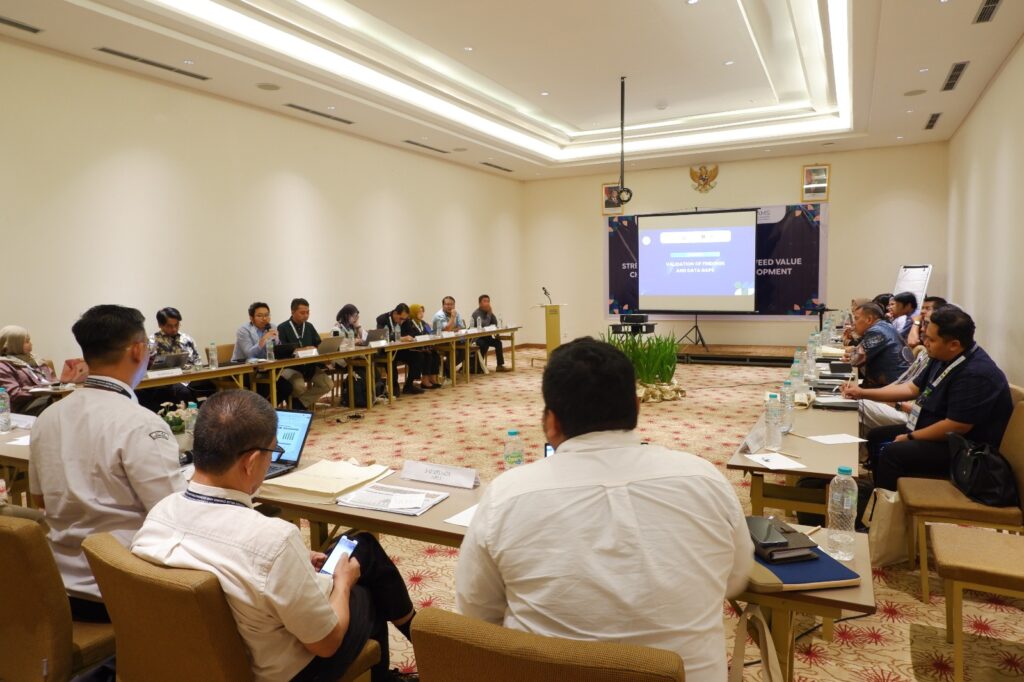
The Food and Agriculture Organization of the United Nations (FAO), in collaboration with the International Tropical Seaweed Research Center (ITSRC) of the University of Mataram (UNRAM), organized the National Workshop on Strengthening Sustainable Seaweed Value Chains and Downstream Development at AONE Hotel Jakarta on 4 June 2026. The forum served as a platform for national stakeholders to jointly discuss strategies for strengthening Indonesia’s seaweed value chain and promoting sustainable downstream industry development.
The workshop was attended by representatives from the National Development Planning Agency (Bappenas), the Coordinating Ministry for Food Affairs, the Ministry of Marine Affairs and Fisheries (MMAF), and the Indonesian Seaweed Association (ARLI), alongside academics and seaweed industry practitioners
FAO’s Support for Indonesia’s Seaweed Sector
Rajendra Aryal, FAO Representative for Indonesia and Timor-Leste, opened the forum by reaffirming FAO’s commitment to supporting the development of an inclusive, sustainable, and globally competitive seaweed sector in Indonesia. FAO’s involvement in this workshop forms part of its ongoing efforts to strengthen the technical and institutional capacities of Indonesia’s aquaculture sector.
Remarks from Bappenas, the Coordinating Ministry for Food Affairs, and the Seaweed Directorate of MMAF further emphasized that strengthening the seaweed value chain is a national priority, aligned with the government’s downstream industry development agenda.
The Role of ITSRC University of Mataram
ITSRC Unram served as the academic and technical partner for the workshop. Dr. Eka Sunarwidhi Prasedya, MSc., Ph.D., presented the preliminary findings of a national seaweed sector assessment, covering value chain mapping from seaweed farming activities, collector networks, processing industries, to downstream development and product traceability within global markets. These findings provided the basis for discussions during the validation session, where participants reviewed key findings and identified existing data gaps.
Also attending the workshop was Dr. Nunik Cokrowati, a seaweed researcher from the University of Mataram, along with other academics who enriched the discussions by sharing their field research experiences in tropical seaweed cultivation.
Safari Aziz, Chairman of ARLI, led a discussion session on key challenges and development opportunities, bringing industry perspectives to complement the academic findings.
“We are grateful for the opportunity to collaborate with FAO and all stakeholders in this important forum. We hope that the outcomes of today’s discussions will generate tangible benefits, particularly for seaweed farmers across Indonesia,” said Dr. Eka Sunarwidhi Prasedya.
Outcomes and Follow-Up Actions
The workshop was held from 08:30 to 17:00 WIB and featured three main panel sessions followed by a final synthesis session. The policy and investment recommendations generated during the workshop will be compiled and communicated to relevant stakeholders as inputs for future planning and development of Indonesia’s national seaweed sector.