ITSRC Strengthens Seaweed Biosecurity Through Follow-up Webinar
Discussions with experts and stakeholders continue the series of workshops held in Jakarta and Lombok.
Mataram, July 14, 2026 — The International Tropical Seaweed Research Center (ITSRC) at the University of Mataram hosted a follow-up webinar on the Progressive Management Pathway for Improving Aquaculture Biosecurity for Seaweed (PMP/AB-Seaweed). The webinar brought together 23 participants from research institutions, government agencies, universities, industry associations, the private sector, and international research partners.
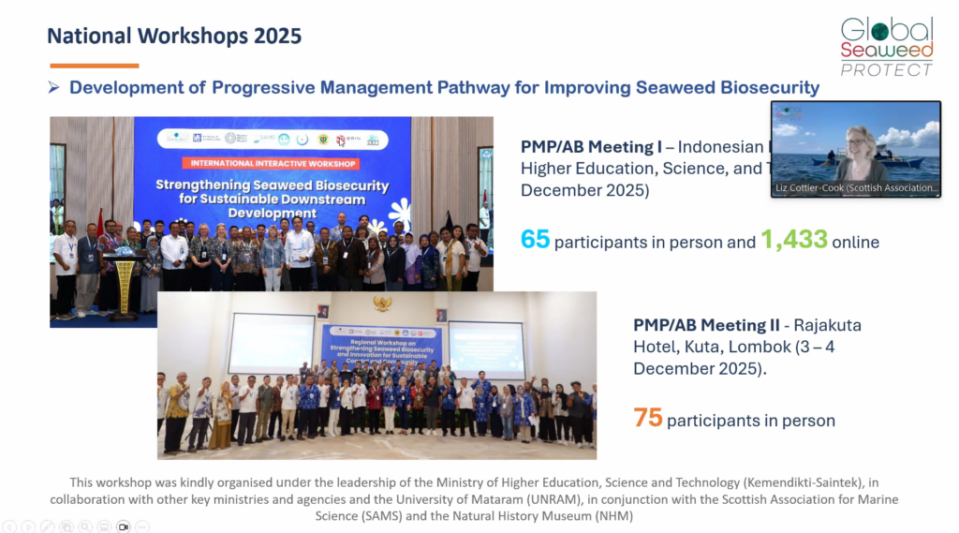
The webinar is part of a series of activities following the face-to-face workshops held in Jakarta and Lombok in 2025. These workshops involved more than 100 representatives from government agencies, the seaweed industry, research institutions, non-governmental organizations, and academia to discuss strategies for strengthening seaweed biosecurity in Indonesia.
The Jakarta workshop was jointly organized by the Ministry of Higher Education, Science, and Technology and the University of Mataram at Graha Diktisaintek on December 1, 2025. The meeting highlighted the importance of collaboration among government, universities, research institutions, industry stakeholders, and seaweed farmers in developing a robust biosecurity system to support sustainable seaweed downstream development.
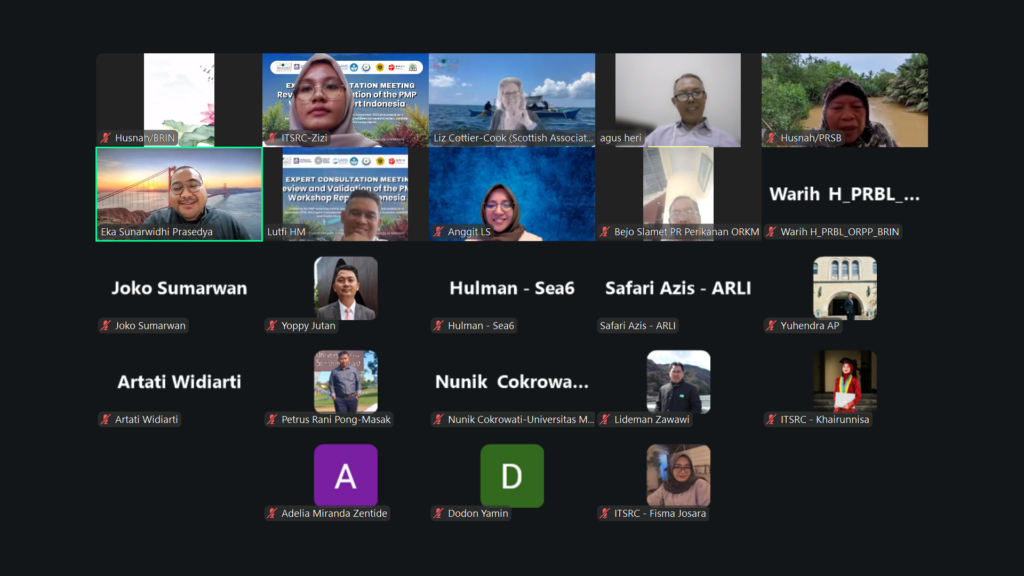
As a follow-up to these activities, the GlobalSeaweed-PROTECT team prepared a seaweed biosecurity report under Work Package 3 (WP3). The webinar provided a platform for participants to review the report and contribute feedback before its online publication.
One of the key discussions focused on the need to communicate the concept of biosecurity more clearly and accessibly. Biosecurity is still frequently misunderstood as food security. In the context of the seaweed sector, biosecurity refers to measures aimed at preventing, controlling, and mitigating biological risks that may affect seaweed health, the cultivation environment, and the sustainability of production.
Participants also emphasized that the report should not be limited to the conditions in Lombok but should offer broader perspectives applicable to other seaweed-producing regions across Indonesia. Additional discussions addressed marine environmental management, the risks associated with harvesting wild seaweed, and the importance of protecting seaweed genetic resources.
Feedback from participating institutions and stakeholders will be incorporated into the report revision process. Once finalized, the report will be published online and is expected to serve as a valuable reference for strengthening biosecurity measures and promoting the sustainable development of Indonesia’s seaweed sector.
ITSRC welcomes contributions and input from a wide range of stakeholders. If you are interested in contributing your expertise, experience, or perspectives, please contact the ITSRC team at itsrc@unram.ac.id.