
2018–2020 | Initiation and Foundation Phase
-
Establishment of the initial research center: Center of Excellence for Biosciences and Biotechnology (PUBB).
-
Strengthening of basic bioscience and biotechnology laboratories for the early-stage exploration of bioactive compounds from tropical seaweeds.
-
Publication of initial scientific articles to validate scientific capacity and strengthen the institutional portfolio.
-
Human resource development plan: staff participation in national training programs in molecular biotechnology.
2021–2023 | Research Expansion and Multi-Omics Technology Phase
-
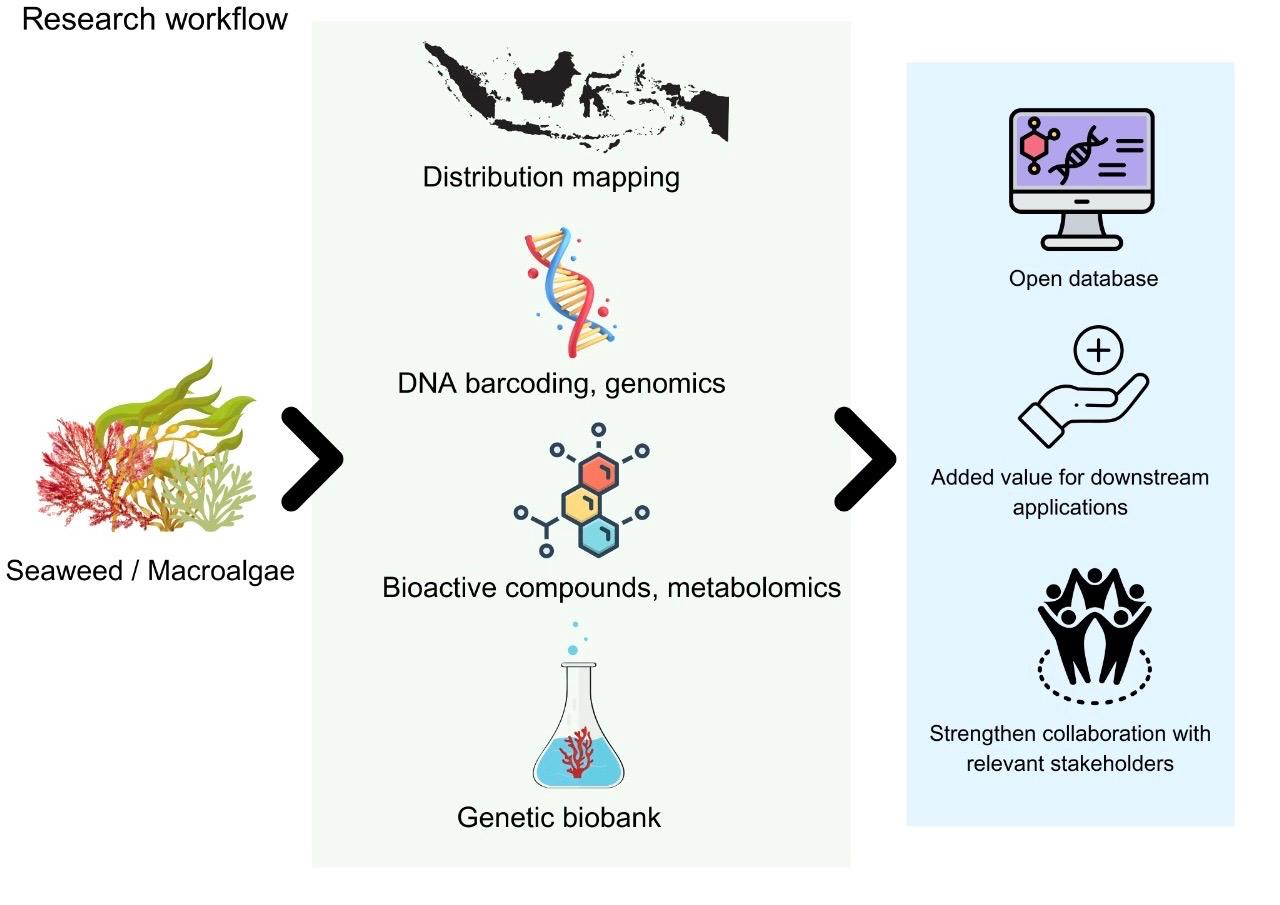
Application of multi-omics approaches (genomics, metabolomics, proteomics) for bioactive and genetic characterization.
-
Increased scientific publication in reputable Scopus-indexed journals (Q1/Q2), along with higher participation in international conferences.
-
Strengthening of biodiversity databases and development of a genetic biobank.
-
Human resource development plan: increased number of doctoral researchers and involvement of Master’s and PhD students in strategic research projects, including a visiting researcher program with international partners.
2024–2025 | Institutional Transformation and Strategic Repositioning Phase
-
Transformation into the University of Mataram International Tropical Seaweed Center (UMCMB) to emphasize the focus on biosciences and biotechnology of marine bioresources.
-
Human resource development plan: advanced training for lab technicians and researchers in seaweed research using bioscience, biotechnology, and multi-omics technologies.
2026 | Recognition and Harmonization Phase
-
Main target: official recognition as a University Center of Excellence (PUI-PT) by the Ministry of Education, Culture, Research, and Technology under the name PUI – Biosciences, Biotechnology, and Seaweed Multi-Omics (BBMORL).
-
Research findings and publications to serve as the basis for national policies and industry training models.
-
Human resource development plan: involvement of early-career lecturers in research consortia, and international grant writing coaching.
-
Initiation of collaborative research-based curriculum with graduate programs.
2027–2030 | Downstreaming, Independence, and STC Integration Phase
-
Institutional integration into the Science and Technology Campus (STC) of the University of Mataram.
-
Downstreaming of research outputs into commercial products (nutraceuticals, biopharmaceuticals, cosmeceuticals).
-
Filing of patents, establishment of spin-offs, and development of business models based on published research.
-
Human resource development plan: graduate research funding through PUI-based schemes and international staff mobility to partner institutions.